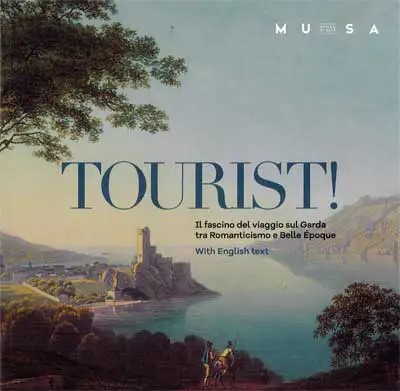
Fino all’inizio del XIX secolo il Grand Tour fu il viaggio di educazione per eccellenza dell’aristocrazia europea.
Più tardi, con l’inizio dell’Ottocento e le sue trasformazioni politiche e sociali, il viaggio smise di essere uno strumento di formazione e diventò ricerca di un “altrove”, un’occasione di sperimentare una diversa relazione con il mondo e la natura. Fu così che il lago di Garda si inserì in quel processo culturale come luogo liminale, dove si fondevano elementi diversi.
In parallelo, nel corso del XIX secolo nacque un nuovo modo di muoversi, che il lessico contemporaneo definisce “turismo”. Da quel momento il viaggio si accorciò, fu organizzato, si rese accessibile a un pubblico sempre più ampio.
Con la Belle Époque tale evoluzione raggiunse una fase di piena maturità e le rive del lago si configurarono come luoghi di villeggiatura, rappresentazione sociale, esperienza condivisa.
Per la prima volta una mostra ripercorre questa storia attraverso una selezione di materiali, impressioni grafiche, dipinti, fotografie e oggetti di viaggio, ordinati nella scansione cronologica di circa un secolo, con particolare attenzione all’intento evocativo.
In co-edizione con MUSA – Museo di Salò
Until the early 19th century, the Grand Tour was the educational journey par excellence for the European aristocracy.
Later, with the early 19th century and its political and social transformations, travel ceased to be a means of education and became a search for an "elsewhere," an opportunity to experience a different relationship with the world and nature.
Thus, Lake Garda became part of that cultural process as a liminal place, where diverse elements merged.
At the same time, during the 19th century, a new way of traveling emerged, which contemporary vocabulary calls "tourism."
From then on, travel became shorter, more organized, and more accessible to an ever-wider audience.
With the Belle Époque, this evolution reached a stage of full maturity, and the lake shores became holiday destinations, a social representation, and a shared experience.
For the first time, an exhibition retraces this history through a selection of materials, graphic impressions, paintings, photographs, and travel objects, arranged chronologically over approximately a century, with particular attention to their evocative intent.
Co-edited with MUSA – Museo di Salò